
Published April 16, 2026 • MyPool • Minnesota pool permit guide
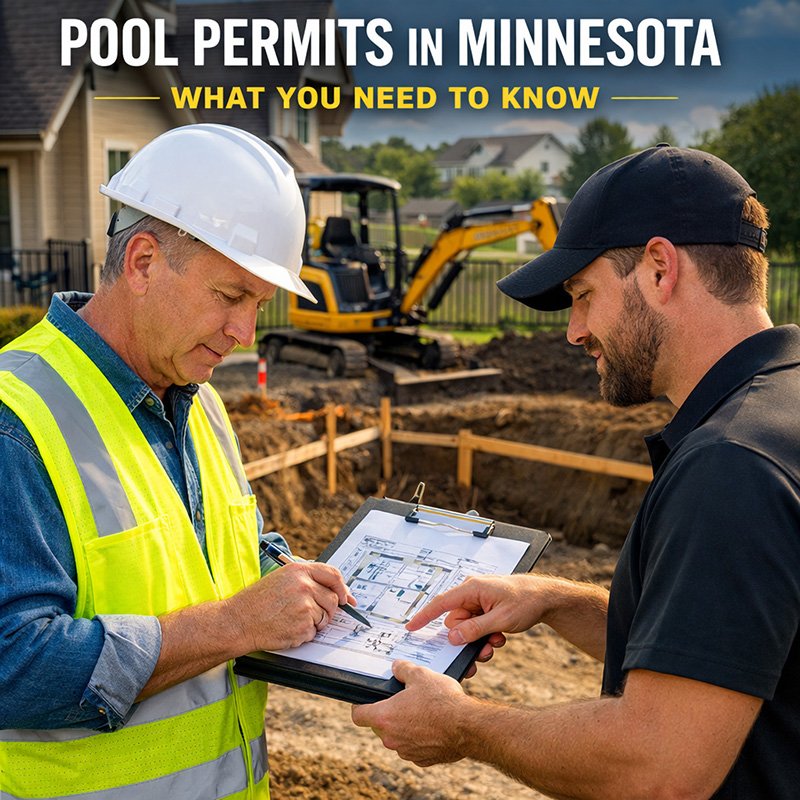
Short answer: yes, almost always.
If you are installing a pool in Minnesota, your city will typically require permits before any digging starts. This applies to both in-ground and most above-ground pools.
Skipping permits is not worth it. It can delay your project, trigger stop-work orders, or force expensive rework after construction has already started.
What Types of Pools Require a Permit?
In Minnesota, permits are commonly required for:
- In-ground pools
- Most above-ground pools over 24 inches deep
- Pools with electrical equipment such as pumps, lights, and automation
- Pools with gas heaters
- Projects that include decking, concrete, or other structural work
Once electrical, gas, or structural work is involved, permits are part of the process.
What Permits Are Usually Required?
Most pool projects involve multiple permits, not just one.
Building Permit
Covers the pool structure itself, excavation, placement on the lot, and overall code compliance.
Electrical Permit
Required for pumps, lighting, bonding, and automation.
Gas Permit
Needed if a heater is being installed, which is very common on Minnesota pools.
Fence or Barrier Compliance
Every pool has to meet local safety barrier requirements. This is one of the areas where city rules can vary the most.
Minnesota Pool Barrier Requirements
There is not one single barrier rule applied the exact same way across the entire state. Requirements are set locally, and the details can vary quite a bit by city.
That said, 48-inch fencing is one of the most common barrier requirements you will see across Minnesota. Some cities go higher.
- Cottage Grove and Eden Prairie require 4-foot fencing
- Minnetonka and North Oaks require 5-foot fencing
- Saint Michael requires 6-foot fencing
- Maximum openings are commonly limited to 4 inches
- Fences must be non-climbable
- Gates must be self-closing and self-latching
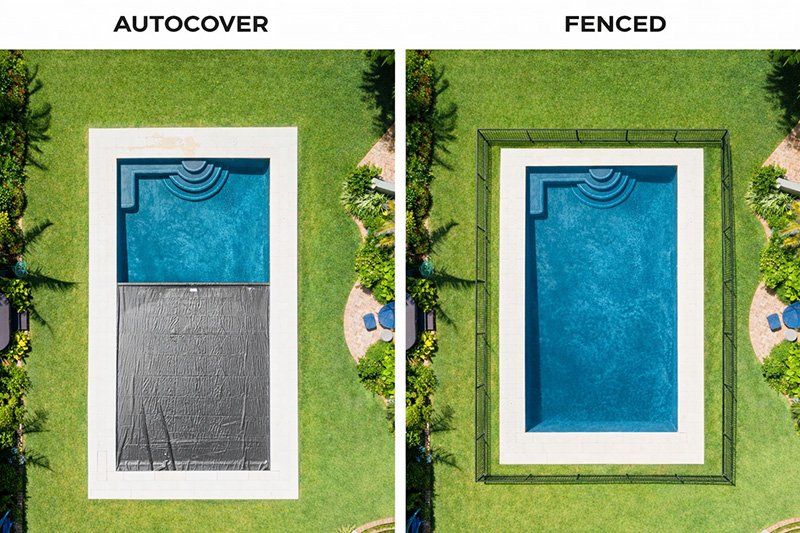
Automatic Cover Exception in Some Areas
Some areas allow an automatic safety cover in place of a fence, including Orono, Minnetrista, Hudson, Wisconsin, and surrounding areas.
This can have a major impact on backyard layout, sightlines, and how the finished project feels day to day.
County vs City Rules
It is also worth noting that some counties may allow automatic safety covers as a compliant barrier, while cities within those counties can still choose to enforce a physical fence requirement.
The key takeaway is simple: it is important to work with a builder that knows your city codes.
Who Pulls the Permit?
If you hire a professional pool builder, they typically handle the permit process for you. MyPool certainly does.
That usually includes:
- Preparing and submitting plans
- Coordinating with the city
- Scheduling inspections
- Responding to plan review comments if needed
This keeps the process moving and reduces the chance of delays caused by avoidable paperwork or code misses.
How Long Does It Take to Get a Pool Permit?
Permit timelines vary depending on the city, the season, and how busy the local building department is.
Typical Minnesota timing
2 to 3 weeks is the sweet spot.
1 to 4 weeks is common overall.
Some real-world examples:
- Woodbury and Plymouth often land in that 2 to 3 week range
- Lakeville and Hopkins tend to be closer to the minimum
- Edina can take significantly longer, sometimes 8 to 12 weeks
This is one of the few parts of a pool project that is outside of the builder's control, so the sooner a permit application can be submitted, the better.
What Happens If You Skip Permits?
It is not worth the risk.
- Stop-work orders
- Fines
- Required removal or rework
- Problems during future home sales
Cities do enforce this, and it happens more often than people expect.
Do You Need HOA Approval Too?
If you live in an HOA, probably yes.
Many associations require separate approval for things like:
- Pool placement
- Fence plans
- Landscaping changes
- Exterior design review
That process is separate from city permits and should be handled early.
The Bottom Line
Every pool project in Minnesota involves permits, inspections, and safety requirements. The process itself is manageable, but the details vary by city.
Planning ahead and working with a builder who understands local requirements can save time, prevent redesigns, and make the whole project go much smoother.
Planning a Pool in Minnesota?
We handle the full process from design through permits and construction, including the local code details that can affect fencing, autocovers, and project timing.
Start with a design conversation that fits your yard, your city, and the way you actually want the backyard to function.