
Published March 24, 2026 • MyPool • Minnesota pool type comparison
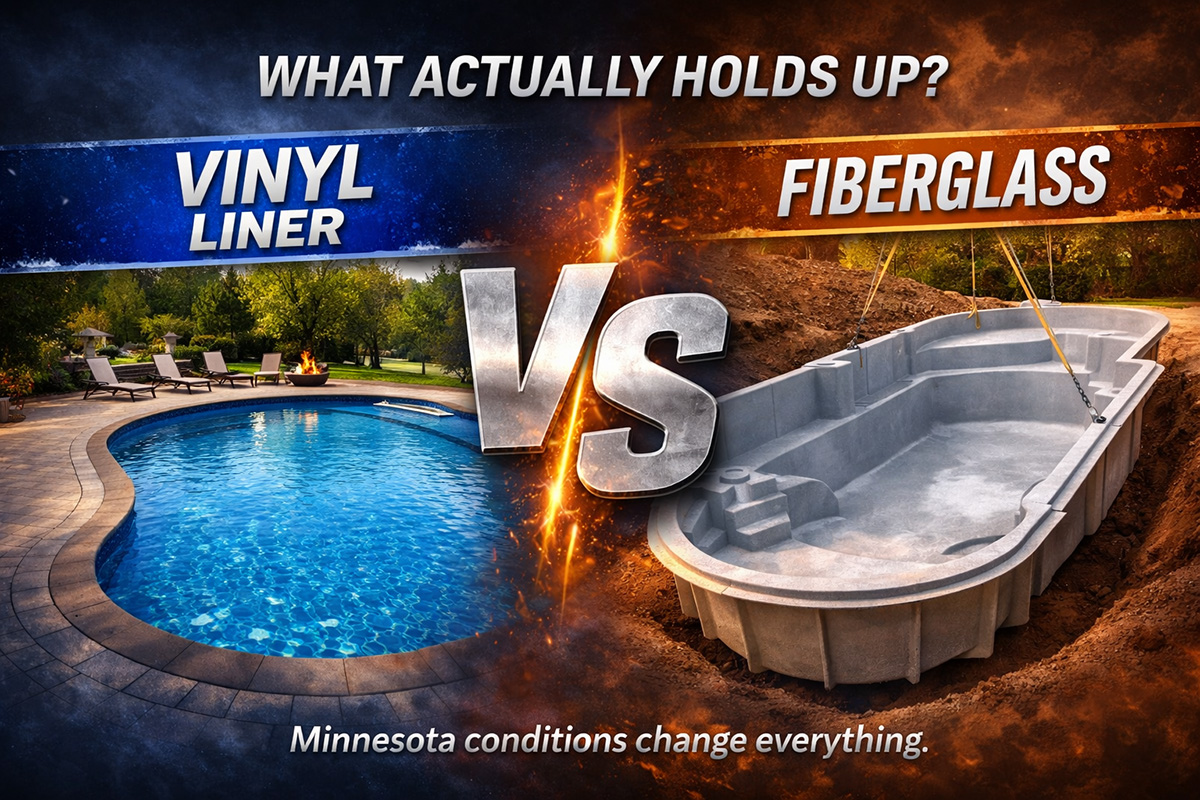
Fiberglass pools are often marketed as the easy answer. In Minnesota, the better question is what actually holds up over time.
If you have been researching pools, you have probably noticed something quickly: fiberglass gets positioned as the simple option. Faster install. Smooth finish. Less maintenance.
In the right conditions, it can absolutely be a solid choice.
But Minnesota is not most places.
Between freeze-thaw cycles, shifting soils, and changing groundwater conditions, what works well in one part of the country does not always translate the same way here.
Most pool decisions are made based on how they look on day one. In Minnesota, that is usually the wrong way to think about it.
After working on and around thousands of pools over the years, one thing becomes clear: the real difference between pool types is not how they look on day one. It is how they handle everything that happens after.
This guide breaks down fiberglass vs steel wall vinyl liner pools specifically for Minnesota, so you can make the right decision for your backyard long term.
Quick Comparison: Fiberglass vs Vinyl Liner
Fiberglass Pools
- Pre-manufactured shell installed in one piece
- Faster installation timeline in the right setting
- Limited shapes, widths, and depth options
- Higher upfront cost in many Minnesota projects
Steel Wall Vinyl Liner Pools
- Built on-site with a structural steel wall system
- Fully customizable size, shape, and depth
- Designed to better accommodate ground movement over time
- Typically a more approachable starting investment
Minnesota Changes the Conversation
In warmer climates with more stable soil, several pool types can perform similarly.
Minnesota is different.
- Freeze and thaw cycles expand and contract the ground
- Soil conditions vary significantly from yard to yard
- Groundwater levels can fluctuate seasonally
Over time, every pool is affected by these forces. The question is not whether the ground will move. It is how the pool is built to handle that movement.
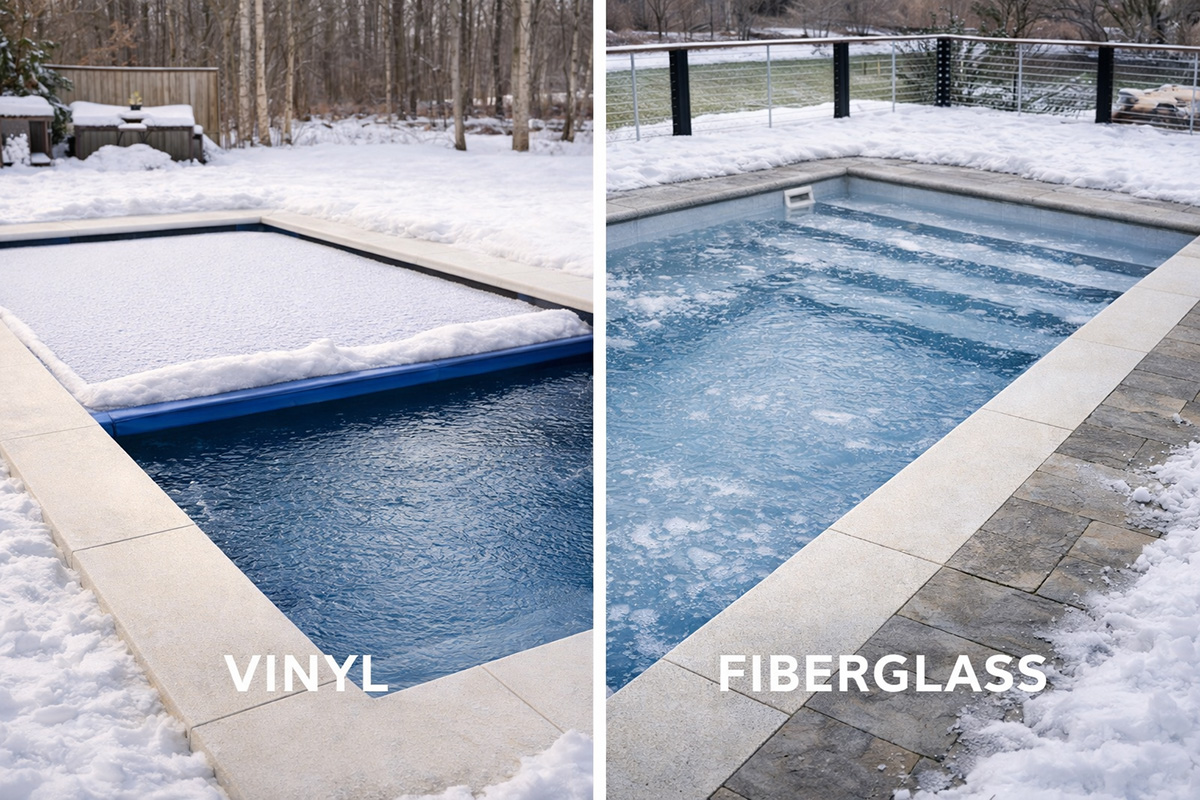
Minnesota weather adds stress that goes far beyond how a pool looks on opening day.
Installation Reality: It Is Not Just Drop It In
Fiberglass pools are manufactured off-site and delivered in one piece. That means the installation process depends heavily on access and precision.
- The shell has to be transported without damage
- A crane is often required to set it in place
- Tight access, trees, or overhead lines can complicate installation
- The shell has to be set extremely level
Because water is perfectly level, even small variations can become visually noticeable once the pool is filled.
Vinyl liner pools are built on-site. That changes the process in a few important ways.
- No crane required
- More flexibility with access and layout
- The structure is assembled and adjusted in real time to match the site
Different process. Different advantages.
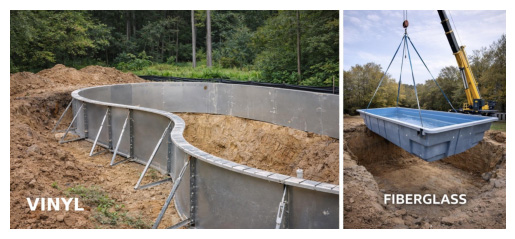
On-site construction changes what is possible when access, layout, and site conditions are not perfect.
Structure and Movement Over Time
This is where some of the biggest differences start to show.
Fiberglass pools are rigid shells. Once installed, they rely heavily on the surrounding soil for consistent support. In stable conditions, that can work very well. In environments with movement, long-term performance depends on how consistently the ground behaves beneath the pool.
Steel wall vinyl liner pools are built differently.
- A structural wall system supports the perimeter
- A concrete footing anchors the structure
- A poolcrete floor creates a porous, supportive base
This kind of system is designed to work with the environment rather than fight it. Over time, flexibility tends to matter more than initial install speed.
Groundwater and Subsurface Conditions
This is one of the least discussed but most important factors in Minnesota pool construction.
Fiberglass pools are essentially watertight shells. In areas with a higher water table, external pressure can build around the structure if drainage conditions are not ideal.
Vinyl liner pools with a poolcrete base are inherently more porous, which can allow better pressure equalization beneath the pool.
In real-world terms, that difference can matter during wet seasons, saturated soils, and over the long haul.
Design, Shape, and Real Backyard Fit
Fiberglass pools come from molds. That means fixed shapes, fixed sizes, and narrower design flexibility. In many cases, widths are capped because the shell still has to be transported to the site.
Vinyl liner pools are built to fit the space.
- Any size
- Any shape
- Any depth profile
- Custom steps, benches, and layouts
This becomes especially important when designing around patios, landscaping, and how the space is actually meant to be used.
In Minnesota, many pools also include automatic safety covers. These systems are installed perfectly square. When a pool shape is even slightly off, it can become visually obvious when compared with the straight lines of the cover system.
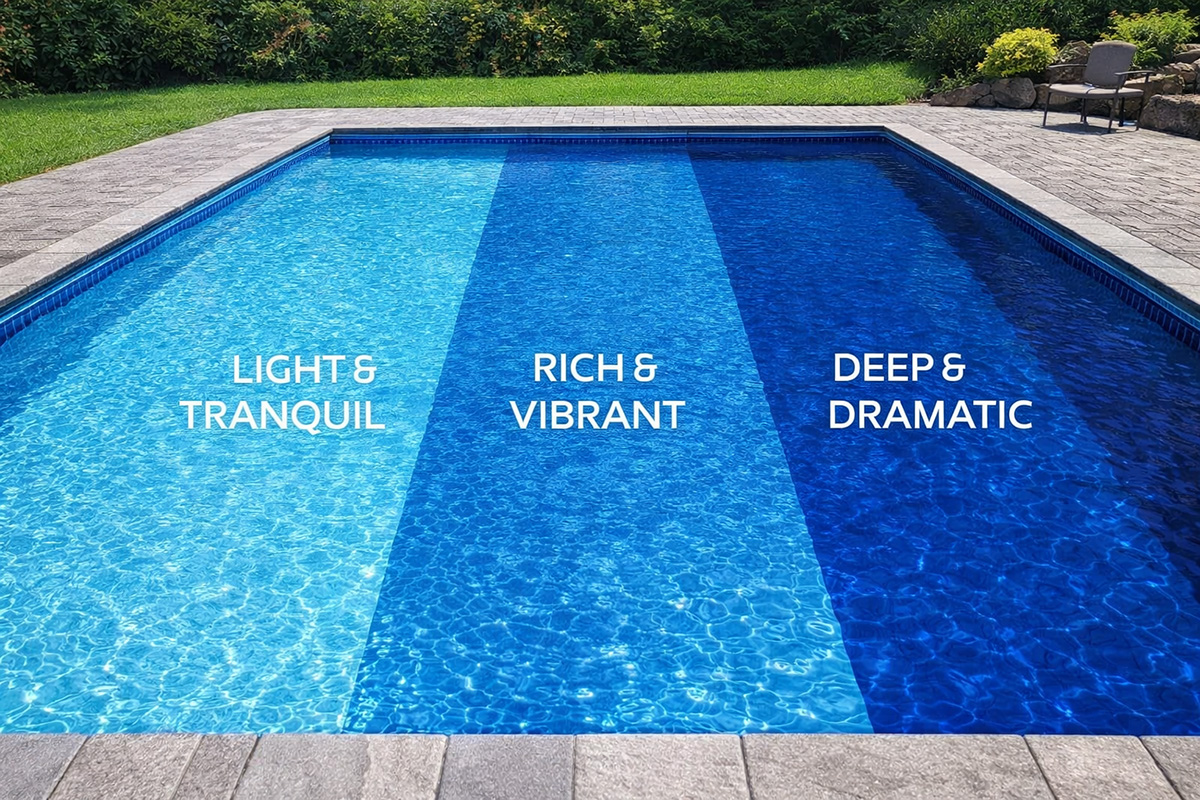
Vinyl also opens up more design freedom, including how the finished water color and overall look of the pool come together.
Maintenance and Long-Term Ownership
Both pool types require proper water chemistry.
Fiberglass is often marketed as more forgiving, but water balance still matters. High calcium can contribute to surface scaling, and in some cases professional refinishing is needed to fully correct buildup.
Vinyl liner pools follow a different lifecycle.
- Liners are typically replaced every 10 to 15 years
- The structure itself remains intact long term
- Repairs are generally straightforward and predictable
So the real conversation is not which one needs maintenance. It is how that maintenance tends to show up over time.
Cost Comparison
In many Minnesota projects, fiberglass pools can come in roughly $10,000 to $20,000 higher than a comparable vinyl liner pool.
In some cases, that difference alone can exceed the future cost of a liner replacement.
Upfront cost is not everything, but it is part of the full picture.
👉 Read our full Minnesota pool cost guide for a broader pricing breakdown
What Most Homeowners Are Not Told
Every pool type has trade-offs. But some details do not usually show up in brochures.
- Transportation can lead to cosmetic repairs before installation
- Site access can limit where fiberglass is even possible
- Perfect levelness is critical and highly visible
- Rigid structures depend heavily on consistent soil conditions
There have also been cases where fiberglass pools in Minnesota were later replaced with vinyl liner pools. That is not the norm, but it does show how important long-term performance becomes in this climate.
None of these points are automatic dealbreakers. They are simply worth understanding before you decide.
So, Which One Makes Sense?
Both fiberglass and vinyl liner pools can work.
The better question is which one fits your yard, your budget, and Minnesota conditions long term.
For many homeowners, it comes down to three things:
- Flexibility in design
- Confidence in how the pool handles ground movement
- A more controlled upfront investment
That combination is why steel wall vinyl liner pools continue to be such a strong fit in this region.
Thinking About a Pool in Minnesota?
Every yard is different. The best way to understand what makes sense is to look at your space, access, soil conditions, and layout goals together.
Start with a design conversation that is built around your property, not a generic brochure.
Final Thought
Choosing a pool type in Minnesota is not just about finish, install speed, or how clean the marketing sounds.
It is about how the pool fits the yard, how it handles the environment, and how it performs long after the excitement of day one wears off.
That is where the real difference shows up.