
Published April 6, 2026 • MyPool • Minnesota pool shape guide
Most people start the process thinking they want a shaped pool.
That makes sense. Shaped pools can feel fun, custom, and different. But once you get into the details of building a pool in Minnesota, the conversation usually changes fast.
Here, the biggest factor is not just style. It is the automatic cover.
Quick Take
In Minnesota, rectangle pools dominate because they give homeowners the option of an undertrack automatic safety cover. That means a cleaner look, better integration, and the setup most new pool buyers prefer.
The Automatic Cover Is What Drives the Shape Conversation
If it is not every new pool in Minnesota, it is close. Automatic covers are part of almost every new pool conversation here, and for good reason. They add safety, reduce maintenance, hold heat better, and make day-to-day ownership easier.
But not all automatic cover setups are the same.
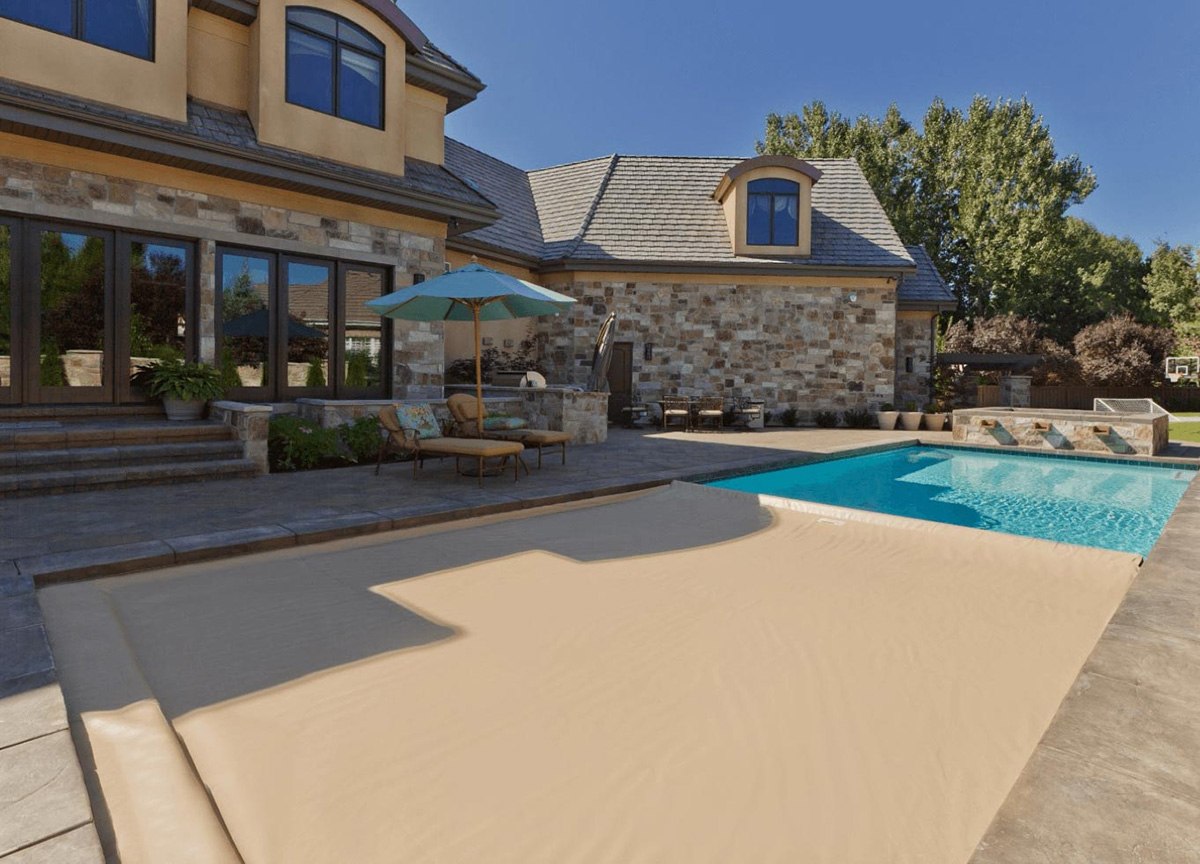
Automatic covers are a major reason pool shape matters so much in Minnesota.
Undertrack vs Toptrack
On a new rectangle pool, you typically have two automatic cover options:
- Undertrack, where the track is built into the pool structure for a cleaner finished look
- Toptrack, where the track sits on top of the patio and remains visible
Toptrack covers absolutely have a place. They are great for older pools, retrofit situations, and projects where adding a cover later makes sense. But when you are building new and have a choice, undertrack usually wins almost every time.
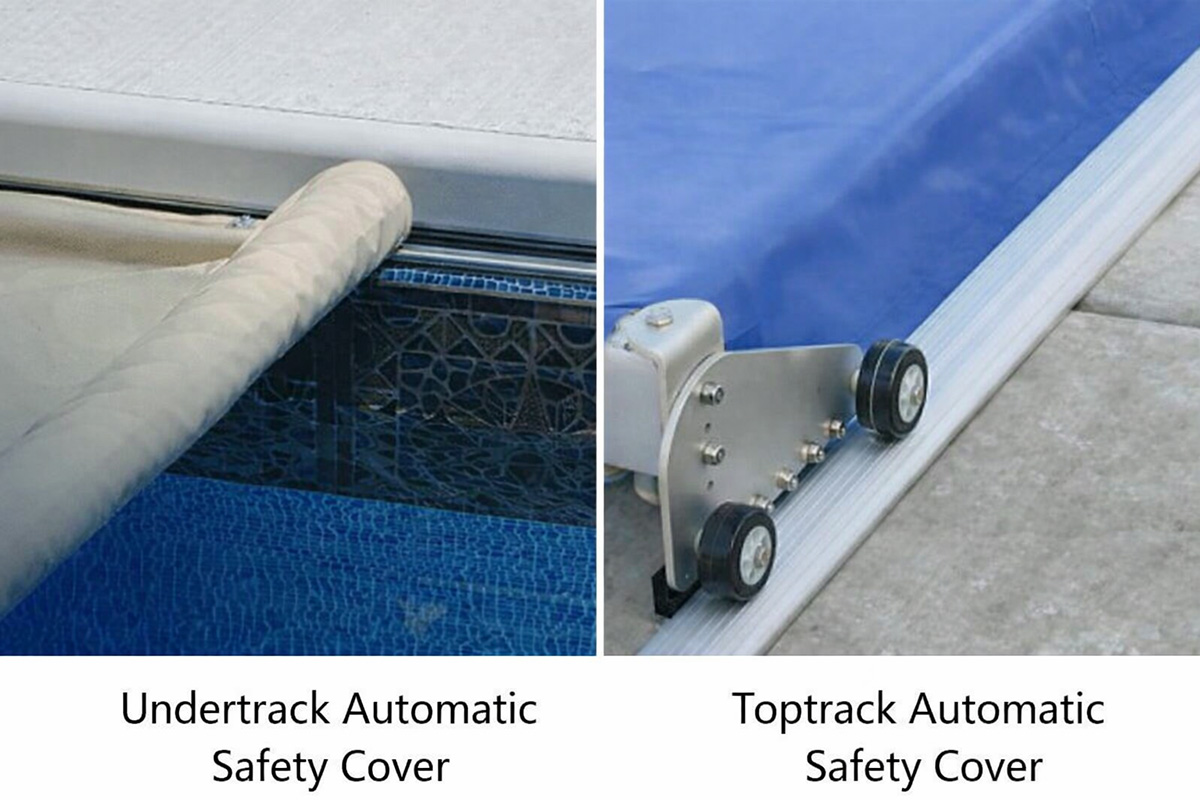
Undertrack gives a cleaner integrated finish. Toptrack is still useful, but you see and feel the rails on the patio.
The reason this matters so much is simple: undertrack is really a rectangle-pool advantage.
Why Rectangles Dominate in Minnesota
When people picture a shaped pool, they usually assume it will fit a yard better or feel more custom. But if the pool is going to have an automatic cover, the track still needs to close on straight lines. In practice, that means the working footprint still behaves like a rectangle, and the shape lives inside that space.
So if the goal is a clean integrated cover system, rectangles rise to the top very quickly.
That does not mean shaped pools are wrong. It just means the most popular and most seamless cover setup in Minnesota points strongly toward rectangle design.
Are Shaped Pools Bad? No.
If you are not doing an automatic cover, plenty of shapes are still on the table. Kidney, oval, figure 8, and Grecian pools can all work well.
If you want a cover now or later, then the amount of shape matters a lot more. Pools with too much shape, like a lazy L or mountain lake design, are generally a hard no for an automatic cover setup.
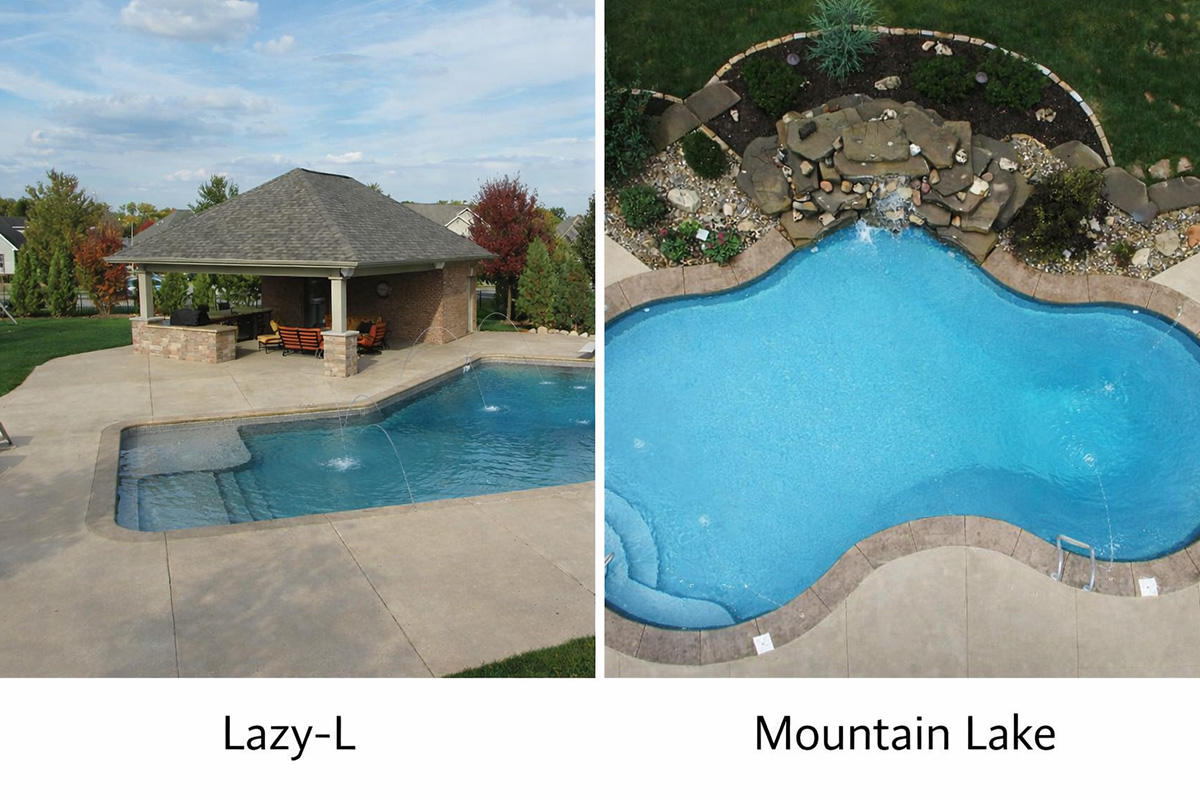
Some shapes are simply too aggressive for an automatic cover layout to make sense.
It is also worth noting that shaped pools usually add cost. The dig is more involved, the materials are higher, and the overall build gets more complex.
Custom Does Not Have to Mean Curvy
A lot of homeowners want a shaped pool because they do not want the backyard to feel plain. That is completely fair. But shape is not the only way to get character.
You can build plenty of personality into a rectangle pool through:
- custom step design
- patio layout and curves around the pool
- seating zones and sun shelf choices
- landscaping and hardscape flow from the house
In other words, you can get the clean benefits of a rectangle pool while letting the steps, patio, and surrounding space create the visual style.
Size and Layout Matter More Than Following a Standard
Typical pool sizes like 16x32, 18x36, and 20x40 are common starting points, but that does not mean one of those is automatically right for your yard.
The best pool size depends on how the yard lays out, what the family wants to use the pool for, and how the space flows from the house to the water. Depth matters too. The deeper you want to go, the longer the pool usually needs to be. If you want a diving board, that changes the size conversation again.
The point is not to force every yard into the same rectangle. The point is to use the rectangle format intelligently around the goals of the homeowner and the space available.
One Layout Feature That Consistently Delivers
When it comes to steps, there are a lot of options. Corner steps, benches, and sun shelves all have their place.
But one layout that keeps proving itself is a full-width step on a rectangle pool.
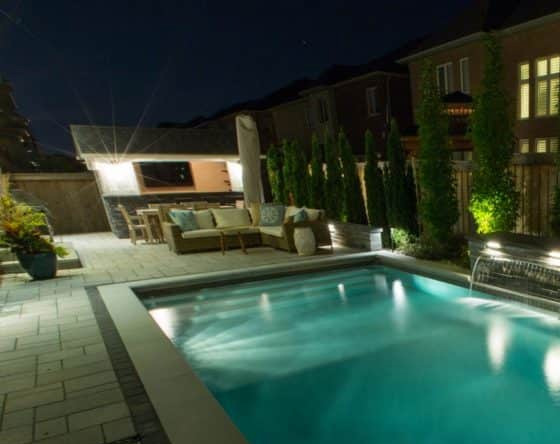
Full-width steps create a big easy entry, cleaner symmetry, and seating depths that work for kids and adults.
It works because the entry is wide and comfortable, nobody gets jammed into one corner, and there are multiple seating depths that suit different ages and comfort levels. It also looks modern, clean, and simple.
Final Take
Rectangle pools are not the default in Minnesota because they are boring. They are the default because they work.
They give you the best automatic cover options, they fit the clean lines of most suburban backyards, and they make it easier to create a backyard that feels intentional from the house all the way to the pool.
If you want the most flexibility, the cleanest integrated cover system, and a layout that is easy to build around, rectangle is usually the best starting point.
Planning a Pool and Not Sure What Shape Makes Sense?
We can walk the yard, talk through your goals, and help you decide what layout fits your space best without forcing a one-size-fits-all answer.